When Hurricane Andrew devastated South Florida and Louisiana in August of 1992, The Home Depot’s associates and customers worked side-by-side to rebuild the region. Through this experience, we learned that The Home Depot is an important part of the necessary infrastructure in communities affected by natural disasters.
More than 30-years later, The Home Depot is proud to be one of the leading corporate supporters of disaster preparedness and recovery in the United States. Taking care of our teams and neighbors is ingrained in our culture and we know how to prepare for a storm, how to weather it and how to help rebuild once it has passed.


Community Support Before, During and After the Storm
The 2026 storm season officially begins on June 1, and we are committed to supporting communities nationwide before, during and after a storm in a myriad of ways including:
Sales Tax Holidays & Expert Help
Ahead of hurricane season, we encourage consumers to take advantage of emergency preparedness sales tax holidays in states across the country to purchase essential preparation supplies at reduced costs. Throughout the year, we also offer resources for natural disaster and hurricane preparedness, sharing project guides, product checklists and virtual workshops.
The Home Depot Command Center
In response to significant disasters, we activate a command center for continuous, daily communication between teams, impacted stores, and suppliers. Our emergency command center organizes more than 100 expert associates across the business in real-time ahead of a storm.
Federal and Local Collaboration
Working together with local, state and federal officials, we provide critical supplies and emergency management funding through partnerships with organizations like the American Red Cross and FEMA.
On-the-Ground Support
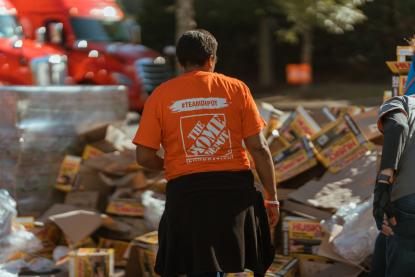
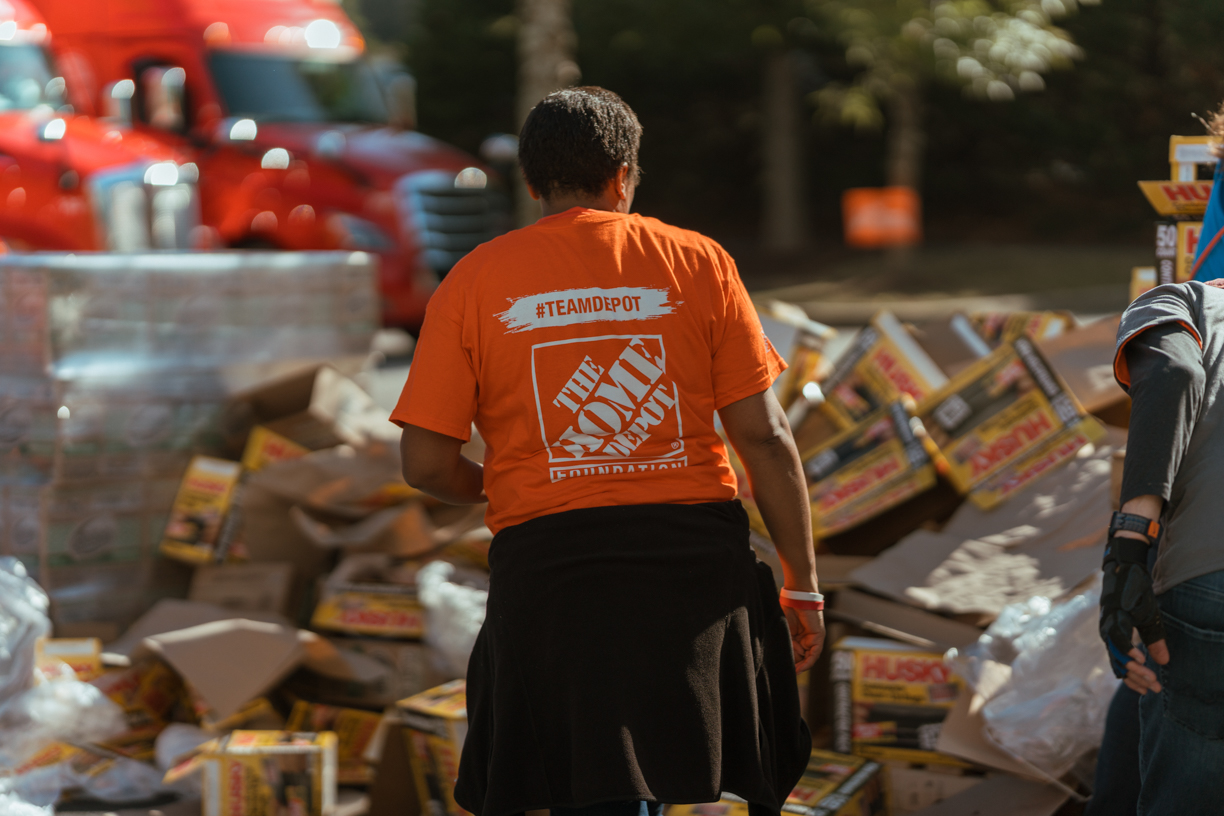
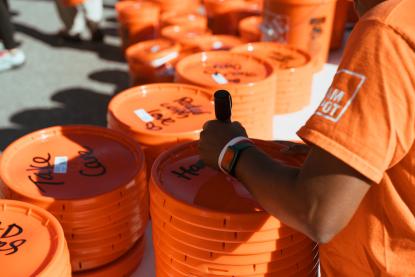
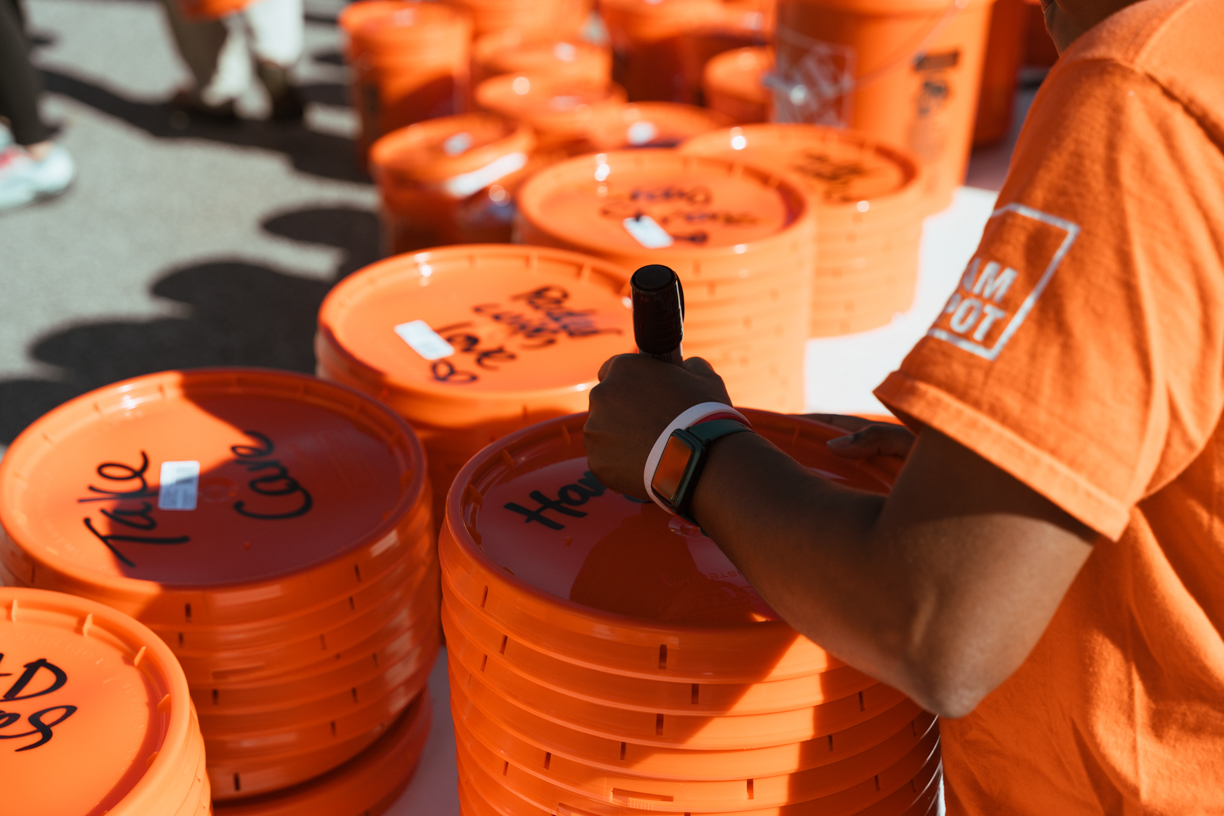
Team Depot, our associate volunteer force, assembles disaster relief buckets full of emergency supplies to quickly deploy to impacted areas. Team Depot donates relief supplies to nonprofits, first responders and government agencies and provides volunteers to clean up in local communities.

Stores & Supply Chain Logistics
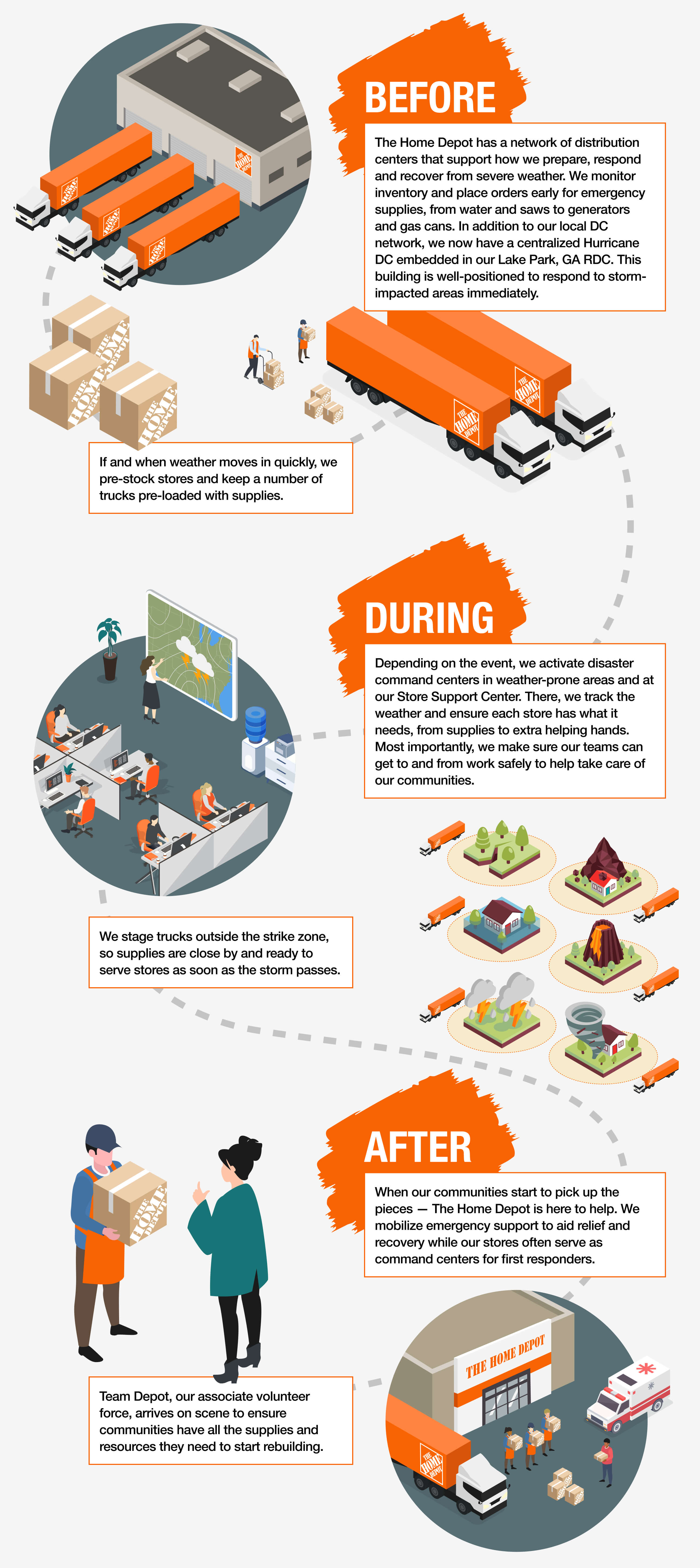
The Home Depot operates one of the largest and most intricate supply chain networks in retail and an impending hurricane creates a whole new level of complexity.
“People don’t really understand the magnitude of the supply chain response when a hurricane is happening,” says Johnathan Flores, supply chain HR manager. He manages the Supply Chain Disaster Travel Team that mobilizes associates quickly when there’s a need. Moving essential supplies means working 24/7 in distribution centers. On site, a dedicated team of carriers are ready to help move all the product.
The Home Depot Foundation
Through annual grants to national nonprofit partners and the volunteer efforts of Team Depot, The Home Depot Foundation collaborates with trusted partner organizations, including Team Rubicon, Operation Blessing and Convoy of Hope, to amplify the impact and ensure that aid reaches those in need. In May, The Home Depot Foundation committed to invest more than $5.5 million in support of nonprofit organizations.
Tackling the Labor Shortage in Long-Term Recovery
Recognizing that long-term recovery is increasingly hindered by a severe skilled labor shortage, the Foundation is aggressively expanding its Path to Pro workforce initiatives to ensure communities have the talent needed to rebuild. Following January 2026 research revealing that nearly 60% of Americans lack confidence in their community’s ability to rebuild quickly following a disaster, the Foundation expanded its Path to Pro Education Grants initiative to all 50 states to fund upgrades to trades training programs in schools and nonprofits. Additionally, the Foundation launched its “Strong Homes” program with the Federal Alliance for Safe Homes (FLASH) to train nonprofit construction managers in FORTIFIED Gold standards and resilient building practices. Path to Pro scholarships continue to fund trade school education for students pursuing construction careers, including in hard-hit regions like Los Angeles.
Frequently Asked Questions
How is The Home Depot preparing to serve the community during a disaster?
As always during times of crisis and natural disaster, we’re here to help communities. Our number one concern is the safety of our associates and customers. When a storm is approaching, our focus is to get the right products into our stores and to stay open as long as we can to help get through the storm safely.
The Home Depot also provides volunteers in our communities through Team Depot, our associate volunteer force. Additionally, our human resources team, alongside The Homer Fund, mobilizes to support associates in harm’s way while our operations teams work to be the last stores to close and the first to reopen to help communities recover.
What product categories tend to sell out the fastest once a storm is approaching?
Some stores may sell through product, but our merchandising and supply chain teams continue to replenish them as quickly as possible. Inventory may vary from store to store, but once a storm of significance is spotted, we mobilize additional products and supplies to that area.
What are some of the top items customers should prioritize when preparing for a disaster?
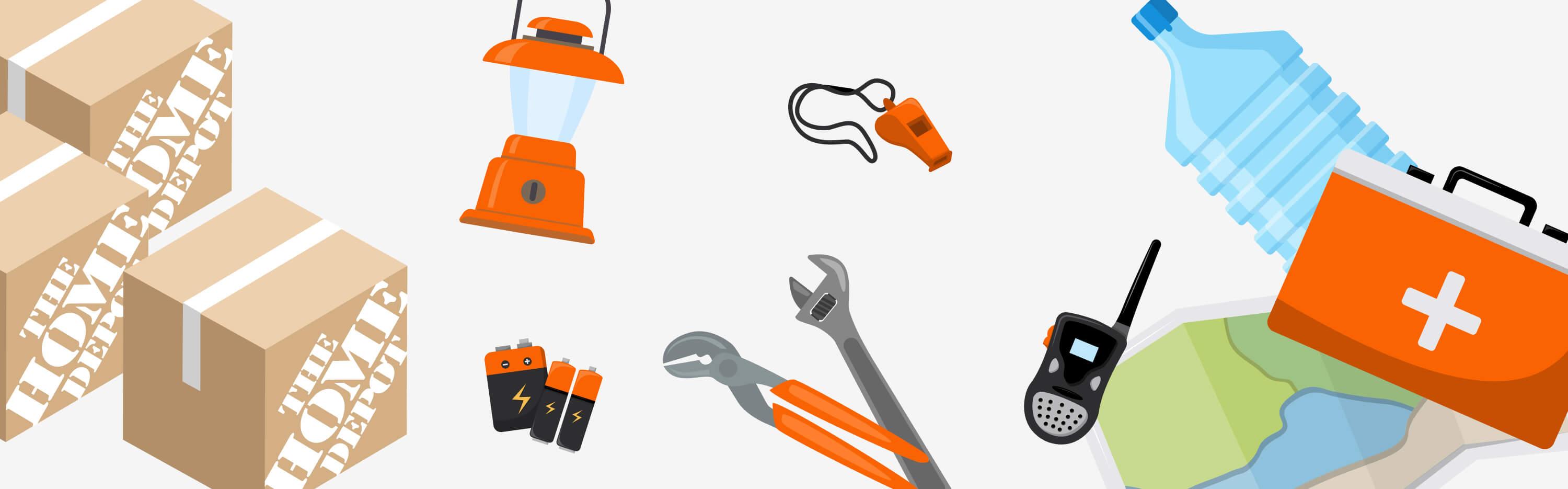
The Home Depot encourages everyone to prepare early for all types of natural disasters, including hurricanes, tornadoes, floods, extreme temperatures and wildfires. Customers should prioritize making sure they have the following products:
- Plywood to cover your windows
- Fasteners to secure the plywood
- Flashlights and batteries
- Bottled water
- Ice chests
- Battery-powered radios
- Emergency phone chargers
- Generators and gas cans
- Emergency flares
- Tarps and roofing materials
- Cleaning supplies
- Long-handled tools
- Chainsaw and fuel

What are some DIY home-prep tips to help protect against wind and water damage?
Before a storm, covering roofs with large, durable tarps with weather-resistant coating and using tarp clips to hold it in place can help protect against potential damage. Covering windows with plywood and using sandbags to keep water out can also be helpful.
Are there any common mistakes people make when preparing their homes for disasters like hurricanes?
The most common mistake people make is not being prepared early enough. Plan for the worst-case scenario. When preparing for hurricanes, consider being without power for days to weeks. Installing a permanent generator or having a portable generator on hand is critical for power outages. Understanding how to use the generator safely is also key to safely weathering a power outage. It's also important to know your evacuation route if you live near a coastal area and a check-in contact for your family to call can also be helpful to mentally prepare.
For more disaster preparedness resources visit the Weather Center Hub.